Interested in genetics and genealogy? If you plan to explore your own DNA for evidence about your family history, keep in mind the variables between the results from the different genetic ancestry companies.
The New York Times ran this guest piece from a genetic counselor in last week's Week in Review section: 23andMe Said He Would Lose His Mind. Ancestry Said the Opposite. Which Was Right?
Here's an excerpt:
Mr. Fender is a coder, not a geneticist, but he had spent enough time scrolling through his 23andMe results to know he had gotten some bad news.
The PSEN1 mutation is associated with an early-onset form of Alzheimer’s, and it is often described as “100 percent penetrant,” which he quickly came to understand meant no exceptions — everyone with the variant gets the disease.
Fortunately, after several false starts, Fender was able to get a second opinion.
Five weeks later, the results were ready. He downloaded his raw data and returned to Promethease. An hour later, he had a new report. He looked for PSEN1 at the top of the list. It wasn’t there.
Dumbfounded, Mr. Fender searched for the variant he was looking for: rs63749911. This time, his genotype was listed as common/normal.
It was good news, and yet, the two tests were at odds. He had heard that both 23andMe and Ancestry were 99.9 percent accurate. Which one should he believe?
“I always think it is important to point out that a 99.9 percent accuracy can still mean errors,” Stacey Detweiler, a medical affairs associate at 23andMe, explained via email. “Even if every variant included in our chip was validated for an accuracy of 99.9 percent (which they are not), that still would mean potential for about 600 errors in the 600,000 variants.”
In other words, the number of mistakes can be as high as 600 per customer.
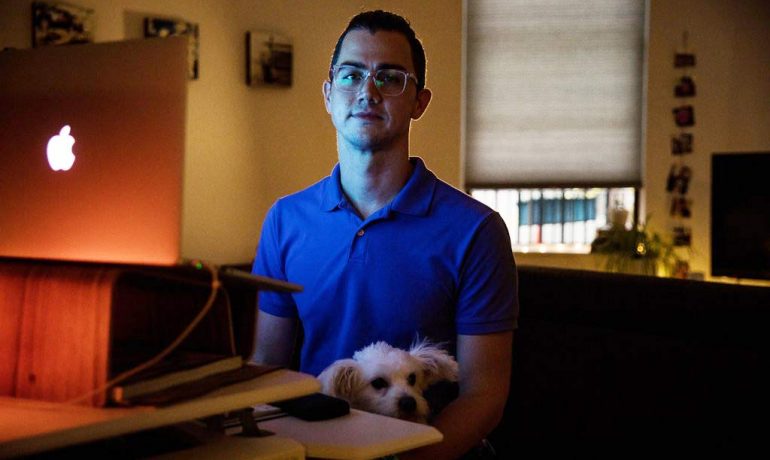
• Pictured at top: Matt Fender photo courtesy of The New York Times