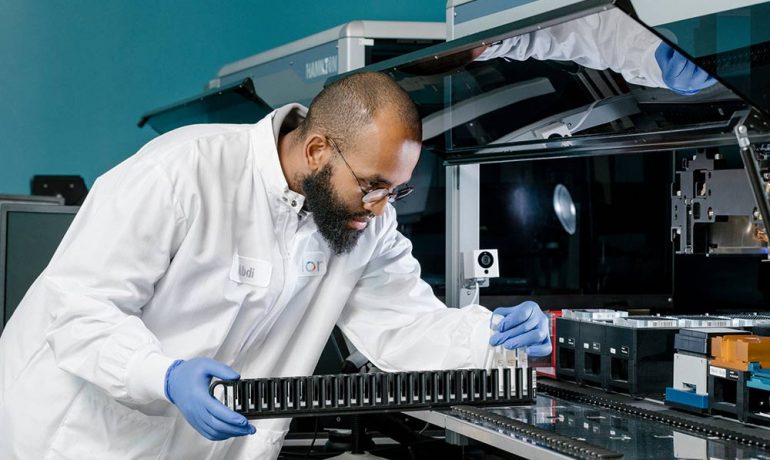
The New York Times has a thought-provoking piece out headlined, Employees Jump at Genetic Testing. Is That a Good Thing?
It's a good question.
The article begins:
Chip Bergh, Levi’s chief executive, said he had hoped that the tests would spur employees to take preventive health steps and in that way reduce the company’s health care costs. But even Mr. Bergh was surprised by the turnout. Of the 1,100 eligible Levi’s employees, more than half took the genetic tests.
It goes on to explore a new employee perk, or benefit, that may have some unforeseen downsides. And it points out:
“As for privacy concerns, executives at several companies said that Color Genomics regularly sent them aggregated data on the number of employees with harmful disease mutations, but that the data is not tied to identifying details like employees’ names or birth dates.”
A sinister twist on genetic testing
There's a scene in my new high-tech thriller Biohack where Birthrights Unlimited CEO Sterling J. Waterhouse muses about “dead peasants” life insurance:
Why not work with life insurance carriers to identify walking health hazards based on their DNA profiles? Why not work with large corporations so they can take out “dead peasants” life insurance, as it’s called, on high-risk employees? When an employer takes out a policy, the employee doesn’t need to know about it. Many of the 2.7 million people in the Biohack database were employed in the corporate world, and Birthrights had collected significant info about their genetic makeups. Why not sell that info to corporate America so they could hedge against the genetic time bombs on their payrolls?
That, too, is a question employees should ponder before rushing off to get their DNA tested by their employers.